
Spotlight
When the Whistleblower Took the Main Stage
Inside Cybersec Netherlands 2026
Cybersec Netherlands 2026 turned digital sovereignty from a policy abstraction into a question of ownership, operational judgment and collective responsibility. Its most powerful example came from a whistleblower willing to make an uncomfortable warning public.
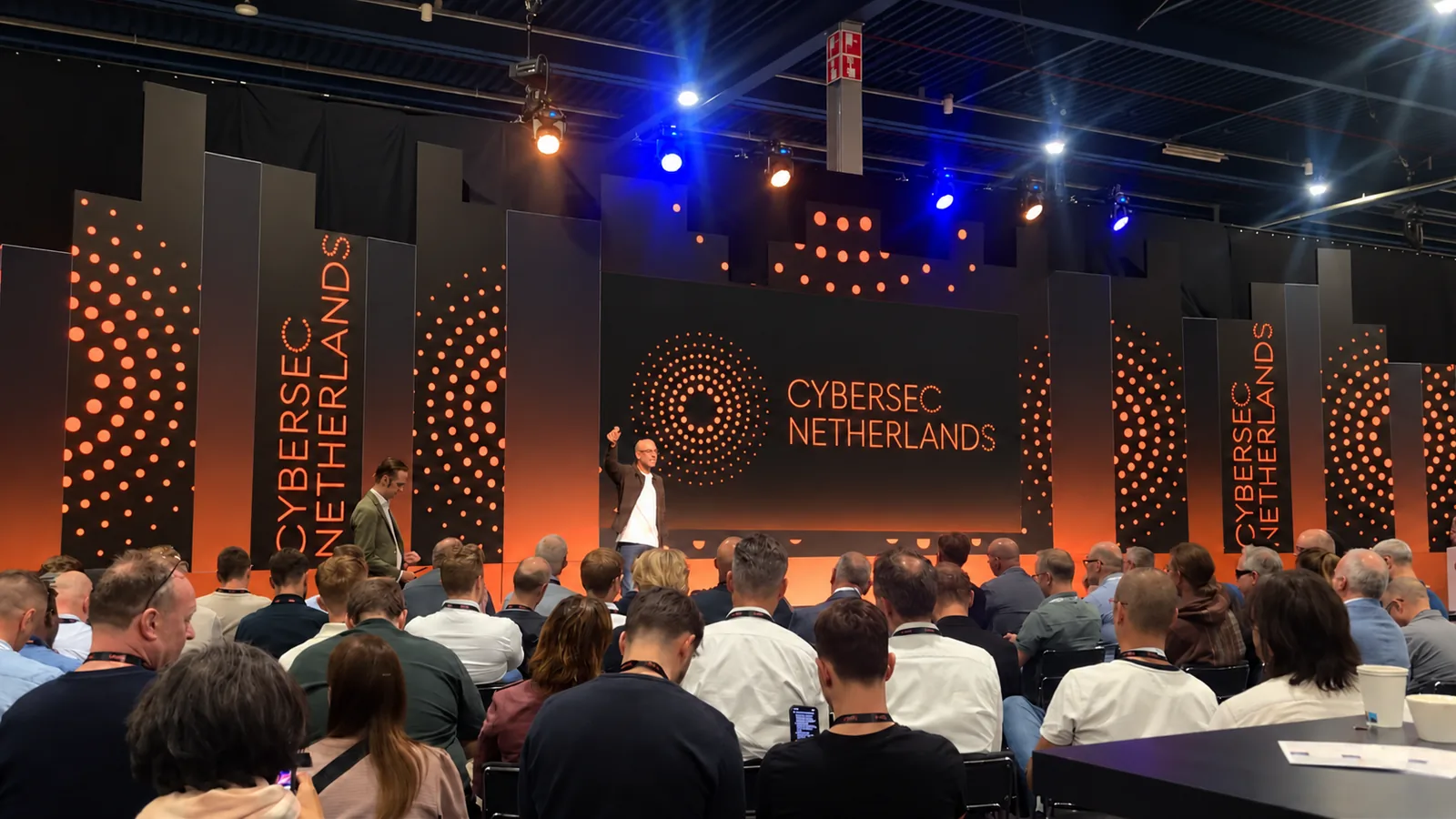
“It’s not an idea anymore. It’s real.”
That was the message as Cybersec Netherlands 2026 opened its doors. The promise was not simply two days of discussion, networking and product demonstrations. This year, organisers said, the emphasis would be on the quality of the information: lessons attendees could use today and tomorrow, answers to urgent questions and a clearer understanding of what must happen next.
One Main Stage appearance would come to embody that ambition. Pieter van Oordt, Chief Privacy Officer at Logius, the Dutch government agency responsible for services including DigiD, MijnOverheid and Digipoort, stood before an audience of cybersecurity professionals, government officials and industry leaders and described what happened when he raised concerns about the proposed acquisition of Dutch cloud provider Solvinity by US-based Kyndryl. His appearance transformed an abstract debate about digital sovereignty into a human story about responsibility, institutional pressure and the protection of critical public infrastructure.
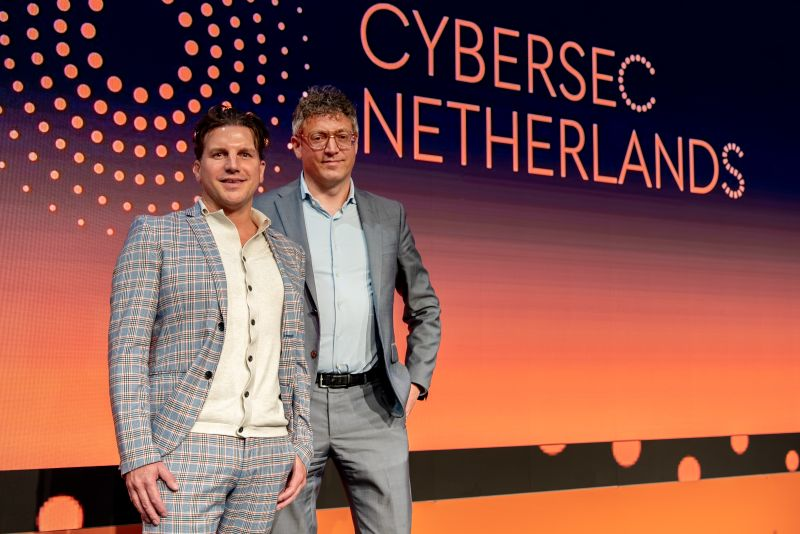
It also raised a broader question: what kind of cybersecurity forum is willing to put such a story on its biggest stage?
Cybersecurity Belongs in the Boardroom
We asked Jeroen Van Nijnatten why Cybersec needs to exist in 2026. His answer is that one of the reasons the event exists is that cybersecurity still does not receive the strategic attention it demands.
“CISOs are still out of the boardroom.”
That is more than an organisational problem. Decisions about suppliers, infrastructure, artificial intelligence, data and foreign ownership can affect the continuity of essential services and, ultimately, national security. Yet the people responsible for understanding those risks are not always present when the decisions are made.
Cybersec Netherlands was created to help close that gap, moving the conversation beyond the technical management of individual threats and towards what Van Nijnatten calls total digital resilience and digital sovereignty. The subjects themselves are no longer unfamiliar. Cybersecurity, technological dependence and sovereignty are discussed extensively.
What remains inadequate, he argues, is the level of awareness and the speed with which that awareness becomes action. The rise of AI makes the task more urgent: it is changing both the threats organisations face and the technologies used to counter them. No company, government department or security team can respond adequately in isolation.
The event therefore aims to act as a wake-up call. Cyber resilience is not solely an IT concern, and digital sovereignty cannot be achieved through disconnected decisions.
Sovereignty Is a Collective Project
That message was echoed by Bart Groothuis, Member of the European Parliament, who stressed that digital sovereignty cannot be delivered by one organisation, sector or country acting alone. It requires a collaborative and collective effort involving governments, European institutions, security agencies, technology providers, researchers and private organisations. Digital sovereignty does not necessarily mean isolation or attempting to build every technology nationally.
It means developing the collective capacity to make independent decisions, manage critical dependencies and protect essential systems without surrendering control to actors whose interests or legal obligations may conflict with Europe’s own. In that sense, cooperation is not the opposite of sovereignty. It is one of its conditions.
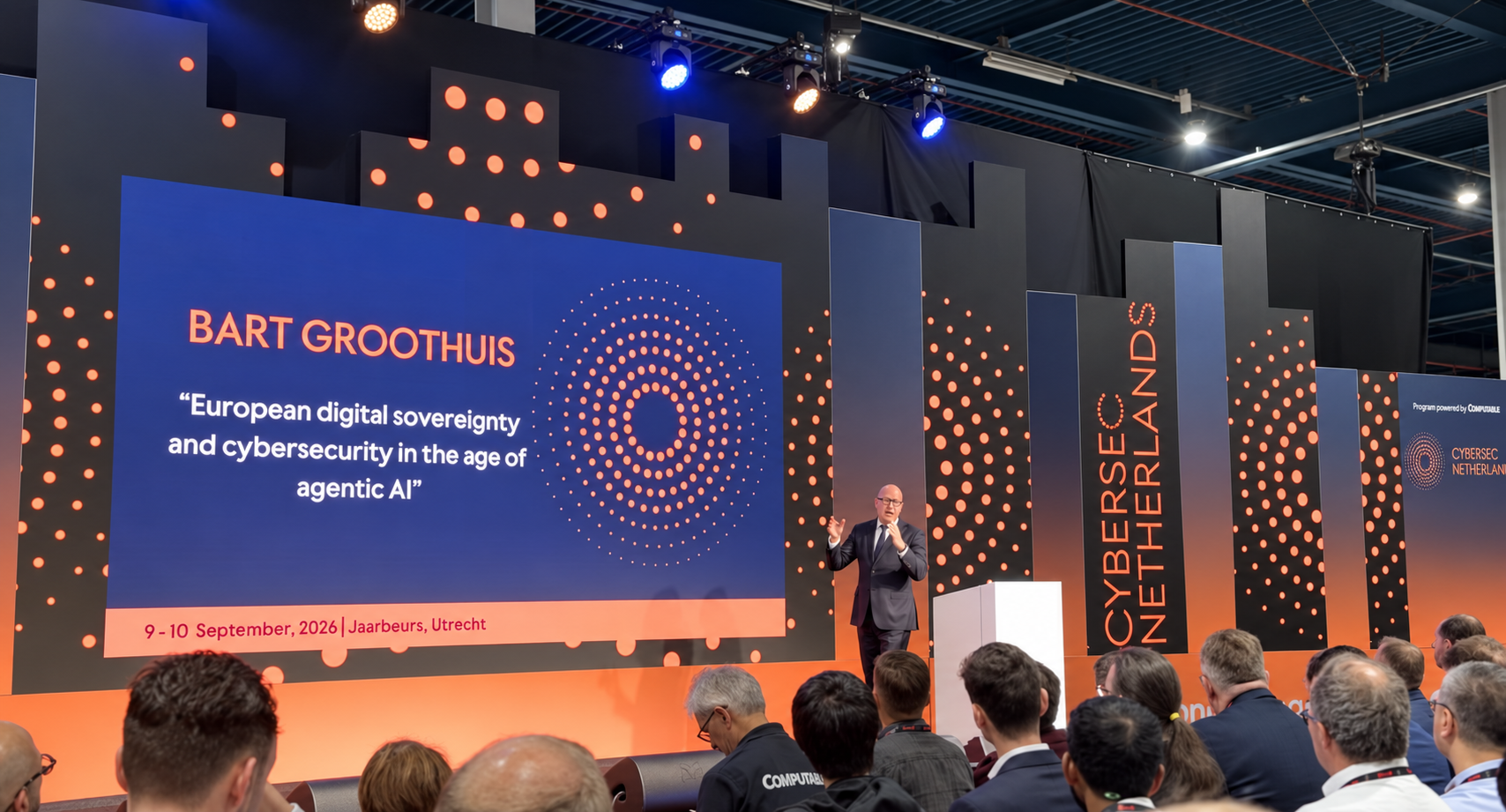
Groothuis placed the Dutch conversation within a wider European challenge. Supply chains, cloud platforms, cyberattacks and technology markets cross national borders. A vulnerability in one organisation or country can rapidly affect many others. Sovereignty must therefore be developed collectively, with countries sharing responsibility as well as ambition.
A Community Not Just a Trade Show
Van Nijnatten describes the event’s purpose primarily in terms of community-building rather than marketing. That means bringing CISOs, technical specialists, government representatives, researchers, policymakers and business leaders into the same room. It also means looking beyond the Netherlands.
Digital infrastructure and cyber threats cross borders, so greater resilience depends on cooperation with key parties across Europe and the wider NATO community. The objective is not to present Cybersec Netherlands as a formal part of that alliance. It is to create a setting in which people connected to the same security challenges can compare experiences, build trust and develop lasting working relationships.
It is intended to be a place to which the community returns each year and one that grows alongside the challenges it confronts. One of this year’s additions was the Tech Theatre, created to bring independent stories together and allow participants to examine technologies and technical questions in greater depth, without every conversation becoming a product pitch. It made the event useful at more than one level: strategic enough for policymakers and executives, but sufficiently practical for specialists seeking knowledge they can apply.
Attendees should leave with “answers, knowledge and what steps we need to take.”
Where Strategy Meets Operational Reality
The gap between cyber threats and organisational reality continues to grow. Defence organisations operate in a world shaped by geopolitical tensions, hybrid threats and continuous digital conflict. CISOs responsible for critical infrastructure, meanwhile, face the daily challenge of securing highly interconnected environments under mounting operational, political and societal pressure.
In their joint session, Colonel Mietta Groeneveld and Jeroen Gaiser, Deputy CISO at the Dutch Ministry of Infrastructure and Water Management, brought those two worlds together. From a defence perspective, Groeneveld presented cyber resilience as a strategic capability in an era in which digital threats are directly connected to national security and societal stability. Gaiser added the operational reality of Dutch critical infrastructure, where resilience is not theoretical: it determines the continuity of essential public services, industrial systems and governmental responsibilities.
Together, they challenged what they called the “linear fallacy”: the belief that an increase in cyberattacks can be answered simply by employing a corresponding number of additional cybersecurity specialists. Talent remains essential, but organisations cannot solve an expanding, interconnected threat landscape through headcount alone, especially while qualified specialists remain scarce. Instead, resilience depends on how effectively people, organisations and systems work together.
Gaiser emphasised knowledge-sharing through a federative approach, in which expertise and responsibilities remain distributed while organisations are connected through trusted structures for cooperation. No single organisation sees the entire threat landscape. Each holds part of the picture, and resilience depends on their ability to combine those insights.
Groeneveld brought the discussion into the reality of an active incident. When immediate containment is necessary, she argued, operational security must take priority. Compliance frameworks remain important, but they must support the mission rather than delay the actions required to contain an attack, preserve continuity and prevent further damage.
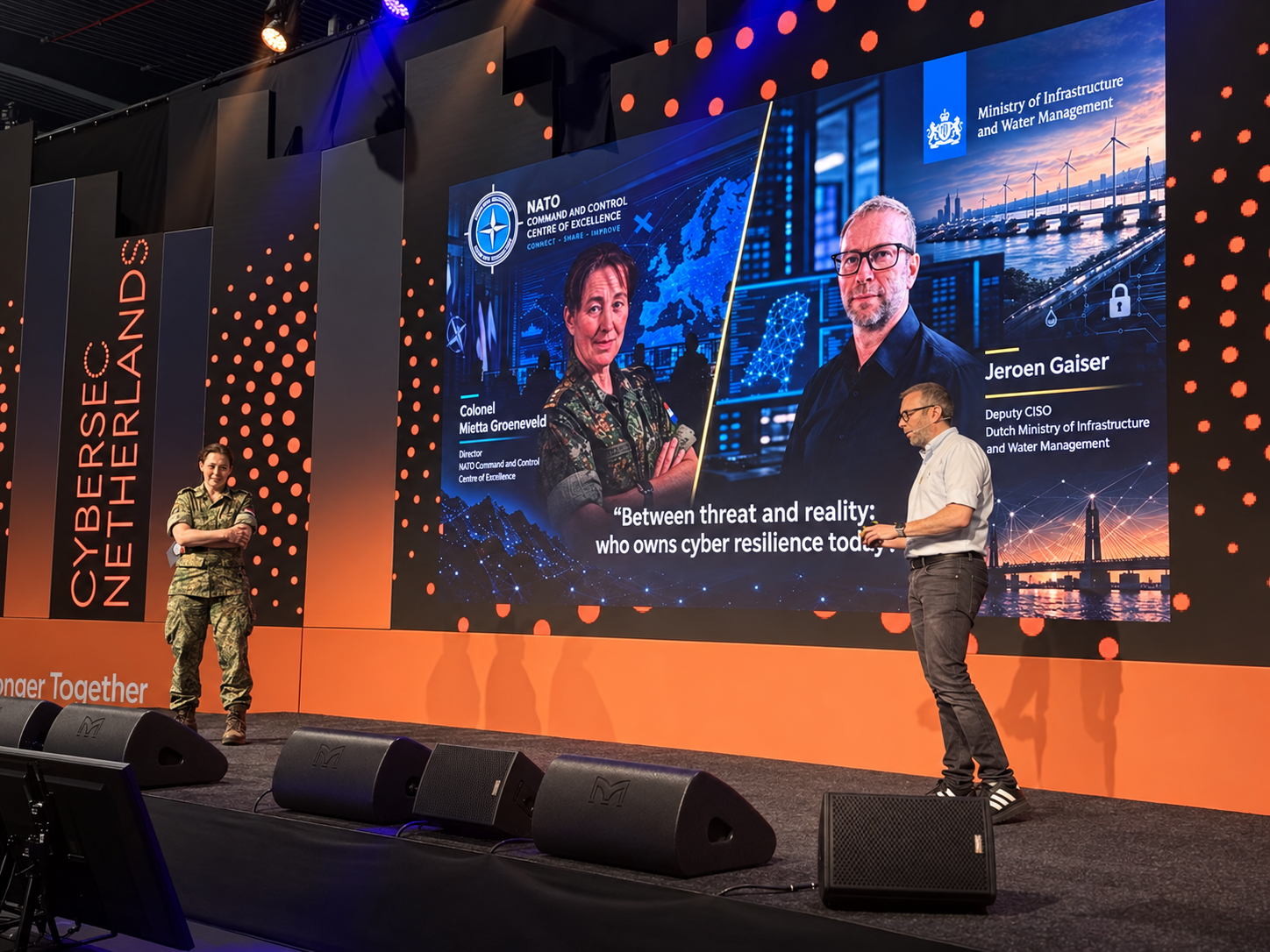
Their discussion exposed the tension between strategy and execution. Although collaboration, information-sharing and collective resilience receive growing attention at the national level, many organisations still struggle with fragmentation, dependency risks, talent shortages and the complexity of protecting interconnected IT and operational technology environments. Cybersecurity leaders must translate these technical risks into questions of governance, operational continuity and public accountability.
Rather than offering simple answers, the session confronted more difficult questions: Who ultimately owns cyber resilience? How do organisations move from awareness to action? What does resilience look like in practice when systems, societies and geopolitical interests have become deeply interconnected? The answer cannot be reduced to more tools or more specialists. It requires clear authority, shared knowledge, joint preparation and trusted relationships across institutional boundaries. Resilience does not grow linearly. It grows through community.
When Sovereignty Becomes Personal
Van Oordt’s Main Stage appearance demonstrated what these principles can mean in practice. He had raised concerns about Kyndryl’s proposed acquisition of Solvinity, which operates infrastructure supporting some of the Netherlands’ most important digital public services. Foreign ownership, he warned, could create risks arising from another jurisdiction, including questions about access to data and the continued availability of essential systems.
He also drew attention to an internal risk assessment that reportedly concluded that the proposed safeguards were insufficient and that had not initially been shared with Parliament in full. Van Oordt first raised his concerns internally. He later took them into the public domain.
The proposed acquisition was ultimately blocked by the Dutch authorities on public-interest grounds. Placing him on the Main Stage was significant because his story did not offer an easy success narrative or a product solution. It concerned institutional accountability, conflicting interests and the personal consequences of voicing an uncomfortable warning.
It also showed why the absence of cybersecurity and privacy expertise from senior decision-making matters. Digital sovereignty is shaped not only by national strategies, but also by procurement decisions, ownership structures, contracts and the willingness of individuals to challenge assurances they believe are inadequate.
Jaarbeurs: Connecting the Cybersecurity Ecosystem
Royal Dutch Jaarbeurs provides the platform for Cybersec Netherlands and acts as a connector for the entire Dutch cybersecurity ecosystem. It brings public authorities, businesses, knowledge institutions, security professionals and technology providers together, providing a stage for collaboration, knowledge sharing and innovation.
That role has developed over the years through Cybersec Europe in Brussels and Cybersec Netherlands, its Dutch edition. By building a cross-border community around both events, Jaarbeurs has helped turn digital sovereignty from a policy ambition into a shared practice: strengthening collective resilience, encouraging trusted cooperation and creating space for the security community to exchange knowledge and prepare together.
The approach also connects security with sustainability. Jaarbeurs has progressively made responsible event organisation and the technology lifecycle more visible, showing that resilience includes not only how systems are protected, but also how technology is sourced, used, reused and retired. The next Cybersec Europe will take place on 26 and 27 May 2027 at Brussels Expo. Register via cyberseceurope.com.
Security and Sustainability Across the Technology Lifecycle
Jaarbeurs’ ambition to become more sustainable was visible not only in the organisation of Cybersec Netherlands, but also in the exhibitor mix. There was a stronger presence of vendors offering sustainable hardware disposal and secure data destruction, connecting end-of-life data security with responsible reuse and recycling. That connection matters.
Cybersecurity responsibilities do not end when a device is replaced or removed from service. Retired hardware can still contain sensitive information, while careless disposal creates environmental costs as well as security risks. Treating secure data destruction, reuse and recycling as parts of the same lifecycle shows how operational security and sustainability can reinforce one another.
Is the Event Making an Impact
Asked whether Cybersec Netherlands is genuinely making a difference, Van Nijnatten is unequivocal.
“Yes, I believe we are. We are making an impact from the moment you are walking in.”
The strongest support for that claim is not the scale of the exhibition floor or the length of its partner list. It is the range of conversations the event is prepared to host. Groothuis presented sovereignty as a collective European undertaking. Groeneveld and Gaiser connected strategic threats to operational reality. Van Oordt showed what happens when concerns about national infrastructure collide with institutional and commercial interests. Van Nijnatten linked them through the idea of community.
The wider programme brought together figures from cybersecurity, intelligence, government and defence, including Pieter Cobelens, former Director of the Dutch Military Intelligence and Security Service; Bas Dunnebier of the AIVD; and Dutch Minister of Justice and Security David van Weel. The event’s advisory board connects independent leaders with experience across education, critical infrastructure, incident response, aviation, technology and public-private cooperation. Van Nijnatten credits that board with helping the event improve from one edition to the next.
The challenge now is to turn the awareness created inside the venue into better decisions outside it: greater CISO involvement in the boardroom, stronger cooperation across sectors, faster information-sharing and clearer action on digital dependencies.
From Conversation to Collective Action
Cybersec Netherlands 2026 presented digital sovereignty not as a slogan, but as a series of practical questions. Who controls essential infrastructure? Whose laws apply to it? Who has access to the information needed to defend it? Who is empowered to act during a crisis? And who is present when strategic decisions are made?
The answers cannot come from one institution alone. Resilience requires community: trusted relationships through which governments, industry, defence, researchers and security professionals can share knowledge, coordinate decisions and act together when it matters. Digital sovereignty requires collective European capacity. Operational resilience requires professionals who can act decisively when an incident is unfolding. Accountability requires people willing to voice concerns and institutions willing to hear them. Van Oordt gave those questions a face and a voice.
The wider programme placed them within an ecosystem of government, industry, defence, research and technical expertise. That combination points to the event’s real purpose. It is not simply to keep cybersecurity in the conversation. It is to move the conversation into the rooms where strategic decisions are made, connect the organisations responsible for national resilience and ensure that the people who understand the risks have both a seat at the table and the authority to act.